Dexcom
Making Three Global Offices Worth Showing Up For
ROLE
UX/UI Designer
TEAM
1 Designer, 3 Executives
SKILLS
UX/UI Design
Product Research
Stakeholder Management
Ideation
Information Architecture
Prototyping
A job listing isn't a reason to move across the world. A feeling is.
I was the only designer. I ran my own stakeholder meetings. I directed the photography. Here is what I learned about how design actually moves through a large organization.
Feedback
"I appreciate that Mark quickly began to connect the dots. He thought beyond the work assigned, past the function itself, and recognized the broader stakeholders. He consistently maintained this visibility; for example, he was conscious of the global impact of photos on a regional landing page, which was a small but important aspect of a much larger project scope. He is receptive and open to feedback and craves more inputs, he is fearless in uncovering routes and find answers to move forward.
Mark is always responsive and communicative. He processes provided information quickly and explores learning independently to ensure understanding. Mark's thorough and inquisitive approach has given me confidence in his capability and delivery of expected outcomes- and beyond! Mark is approachable and flexible, I can count on him to represent the team and collaborate."
- Allyson Kelley, Head of Global Talent Acquisition
Dexcom operates across more than 20 locations worldwide. But when a prospective employee in Penang or Dublin landed on a careers page, they were not seeing their office. They were seeing a generic corporate template that could belong to any tech company anywhere.
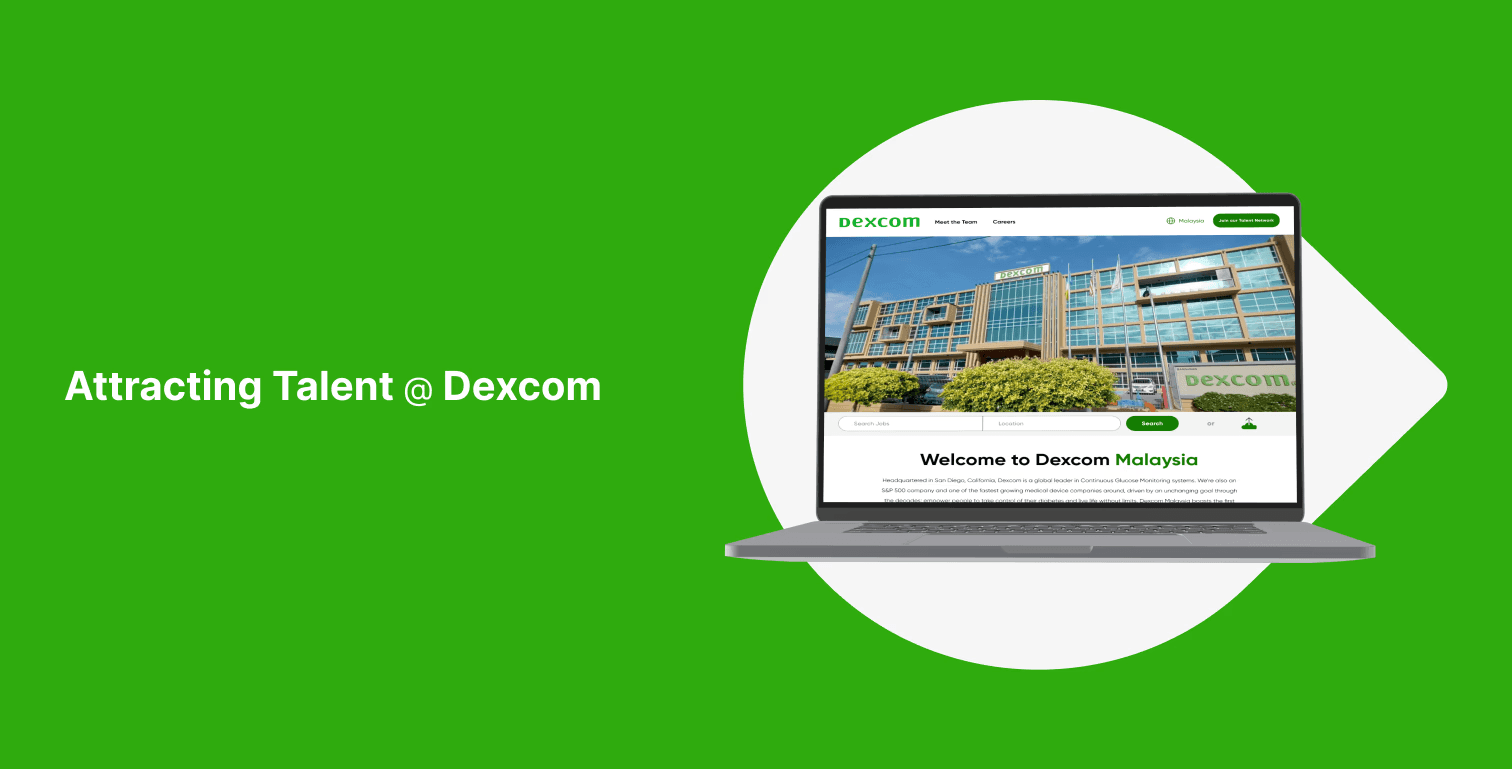
As the only designer on this project, my job was to fix that. I built recruitment landing pages for Malaysia, Ireland, and North America, each with its own identity, reflecting what employees there actually valued, and giving candidates a real reason to picture themselves walking through those doors.

Each landing page had to work within Dexcom's brand guidelines while feeling specific to its location. The structure I developed for each page:
The research pointed strongly toward cultural inclusion and community. The Malaysia page led with the diversity of the office culture, the holiday celebrations, and the sense that every employee's background was actively recognized. I also highlighted the student and early career programs specific to that location, since many candidates at that stage are evaluating not just a job but a place to begin.
The Ireland interviews emphasized the collaborative environment and the opportunity to work across Dexcom's European teams. The page reflected that international reach while grounding it in the specifics of the Dublin office community.
The North America page leaned into Dexcom's mission and the scale of impact available to someone working at headquarters. Each regional office had its own early career track highlighted separately, so candidates could find a path that matched their situation rather than landing on a one-size-fits-all careers overview.
Across all three, the navigation and information architecture were rebuilt in SharePoint to reduce clutter and help candidates find what they needed faster. Cleaner pages meant less time hunting, which mattered especially for international candidates evaluating multiple companies at once.
Most interns in a corporate design role would pull from the brand asset library and call it done. I knew that was not going to work.
A regional landing page for Dexcom Malaysia showing generic office stock photos would have directly contradicted what employees told me made that office special: real people, real holiday celebrations, real culture. The photos had to match the story the research was pointing to.
So in my stakeholder meetings, I came with specific asset requests. I described the feeling I needed an image to carry, the context it would sit in, and what it needed to communicate to someone who had never set foot in that building. My manager later noted that I was conscious of the global impact of photos on a regional page. That awareness came from treating visual assets as research artifacts, not decoration.

Most of the people I needed input from were not designers and had no frame of reference for what a design process looked like. Scheduling across time zones with teams in Malaysia and Lithuania, running meetings where I set the agenda, translating their feedback into design decisions: all of it was figured out as I went.
Working with marketing, branding, and leadership for approvals taught me how design moves through a large organization. Things that felt like blockers at first, like multiple rounds of sign-off and brand compliance reviews, were actually the process working correctly. Getting comfortable with that pace was part of what I took away.
I left knowing how design actually moves through an organization.
I learned a great deal about being inside a corporate environment, where I had to work on multiple deadlines, host my own meetings and go through the process of approvals through marketing, branding, and high-level executives.
The NDA means I can't show the full pages publicly, which is genuinely frustrating because the visual work is where a lot of the thinking landed. Looking back, I'd have documented my process more thoroughly as I went: notes from each stakeholder meeting, a record of why specific photo requests were made, a design rationale document that could stand on its own without the final screens.
The cross-functional work was the part I grew the most in. Running meetings with international teams, presenting to leadership, and navigating approvals across marketing and branding were all new to me. I came in knowing how to design. I left knowing how design actually moves through an organization.
