
BySage Website Redesign
Turning a drop-based clothing brand into a year-round shopping experience.
ROLE
Product Designer
TEAM
4 Designers
SKILLS
UX/UI Design
User Research
Information Architecture
Brand Strategy
Prototyping
How can we redesign BySage’s website to authentically represent its core values and aesthetic?
BySage is a San Diego-based clothing brand built around limited drops and a loyal local following. When we started, the entire brand presence lived on Instagram. The website only opened during launches, which meant first-time visitors had no way to browse the brand, read about its story, or build any connection outside of drop windows.
Our team of four designers was brought on to change that. The brief was a full website redesign: research the audience, define the visual direction, restructure the navigation, and deliver responsive prototypes that the founder could build from.
I led the research phase: writing the survey, conducting interviews, and synthesizing findings into design decisions the team could act on.
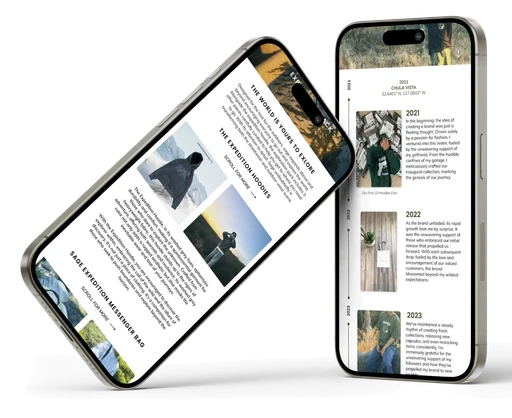
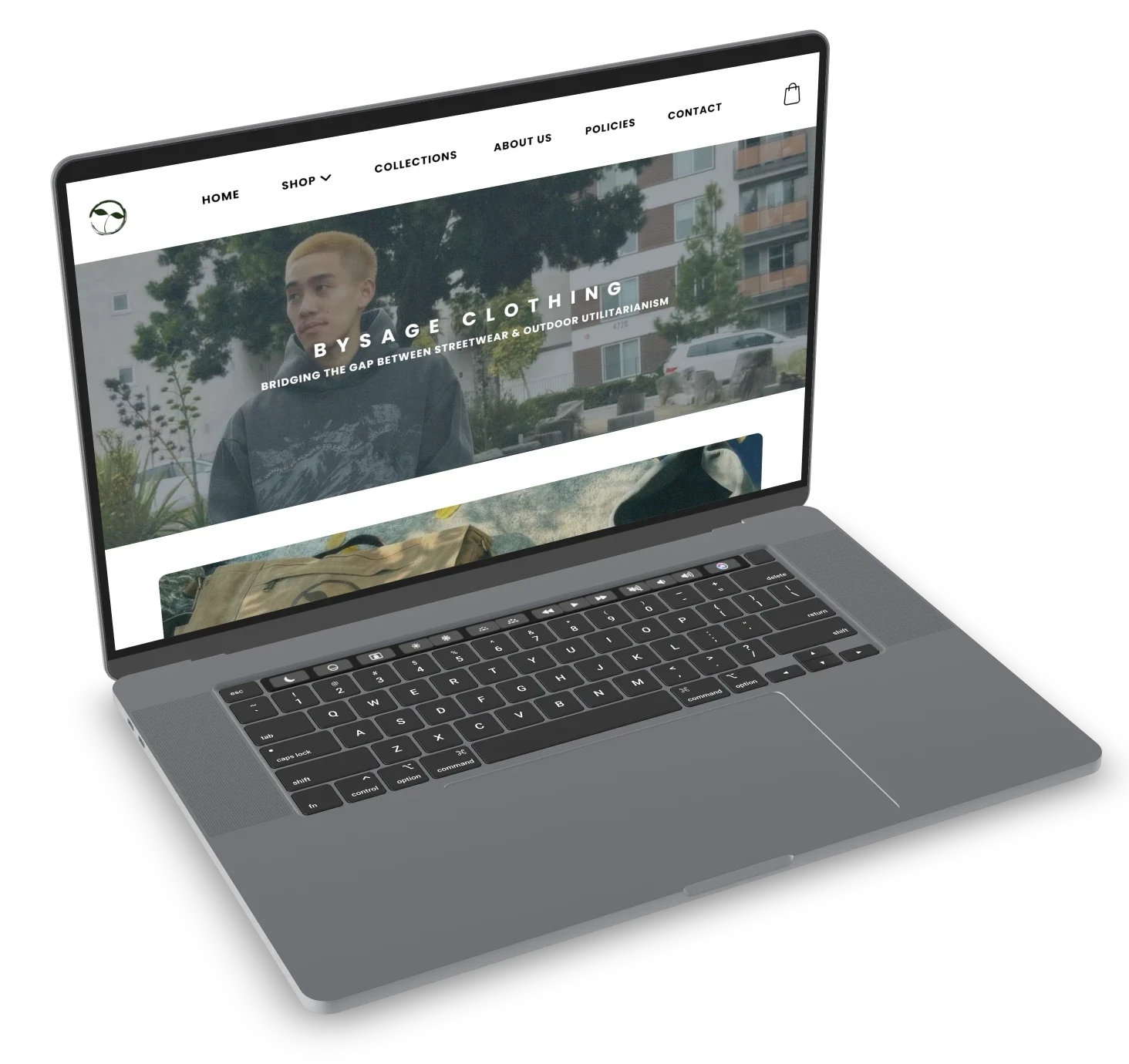
BySage's audience skews young high school and college students who browse and buy from their phones. Responsive design was not optional. We designed mobile-first, then scaled up to desktop, making sure the shopping experience held together across both.

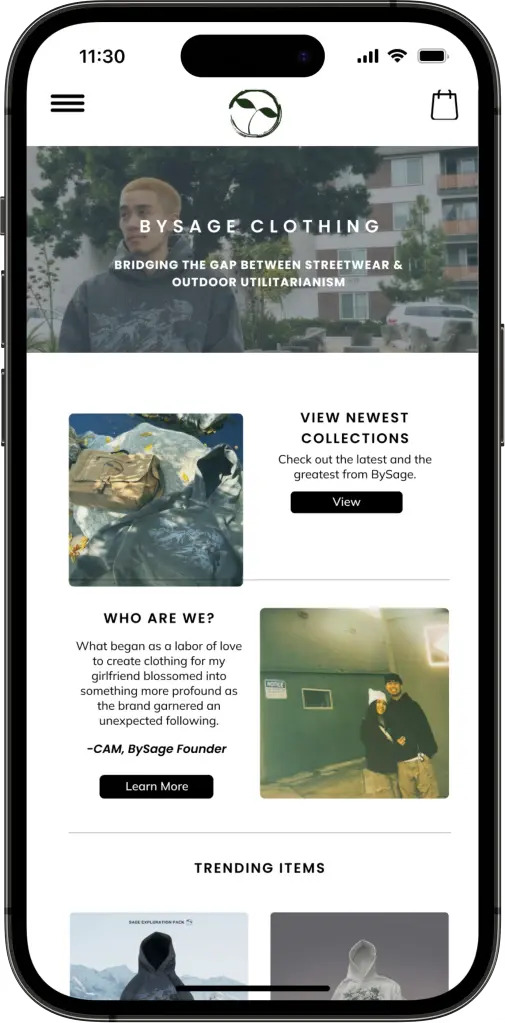

From research and mood boards, we landed on three design principles that anchored the entire redesign:
An earth-tone palette that reflected BySage's outdoor and warm, San Diego identity. A homepage that made an immediate impression, since most visitors were arriving cold from Instagram with no prior context about the brand. Navigation that worked on mobile without friction, because that is where the majority of BySage's customers were shopping.
Every design decision filtered through these three. When we disagreed on direction, we came back to them.
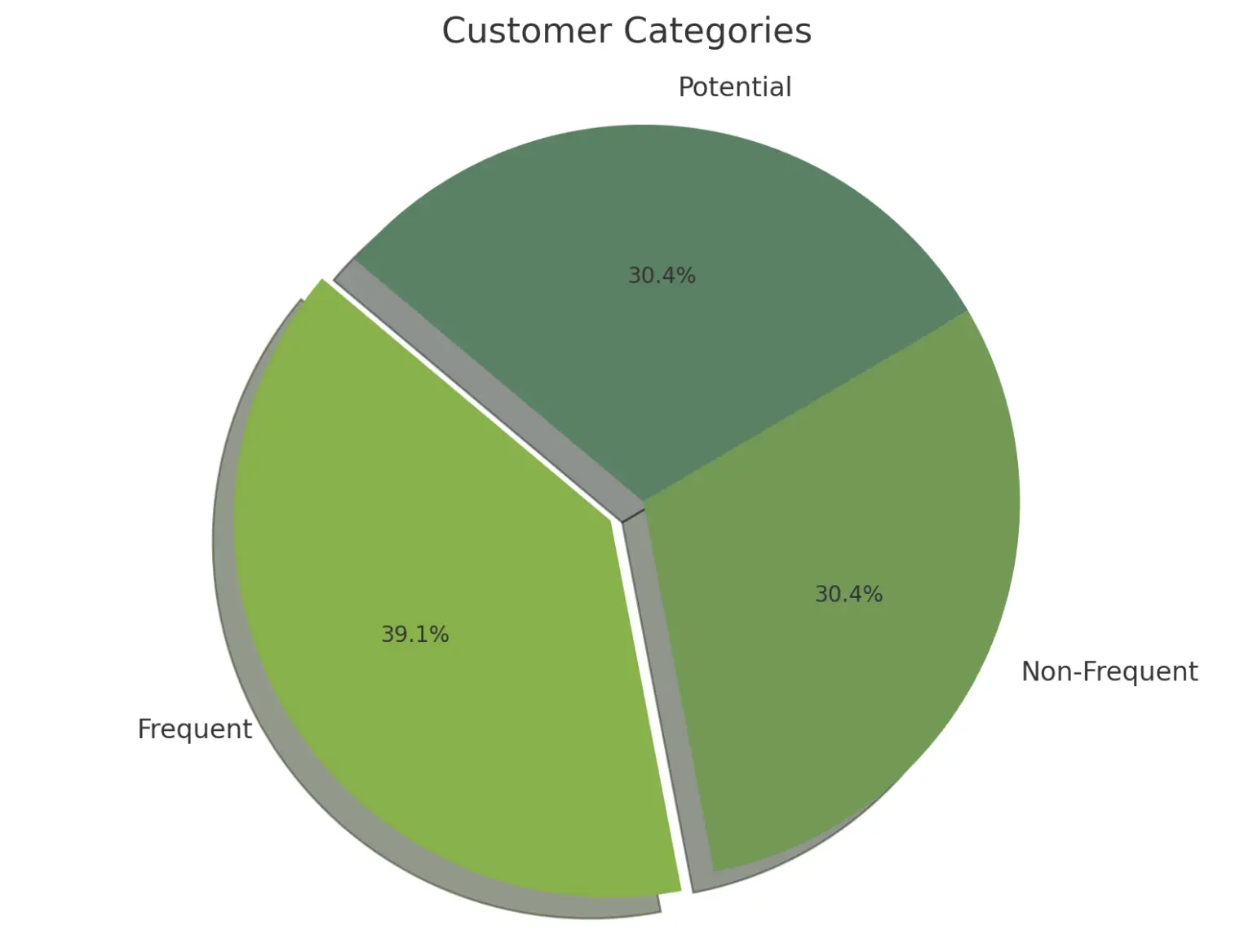
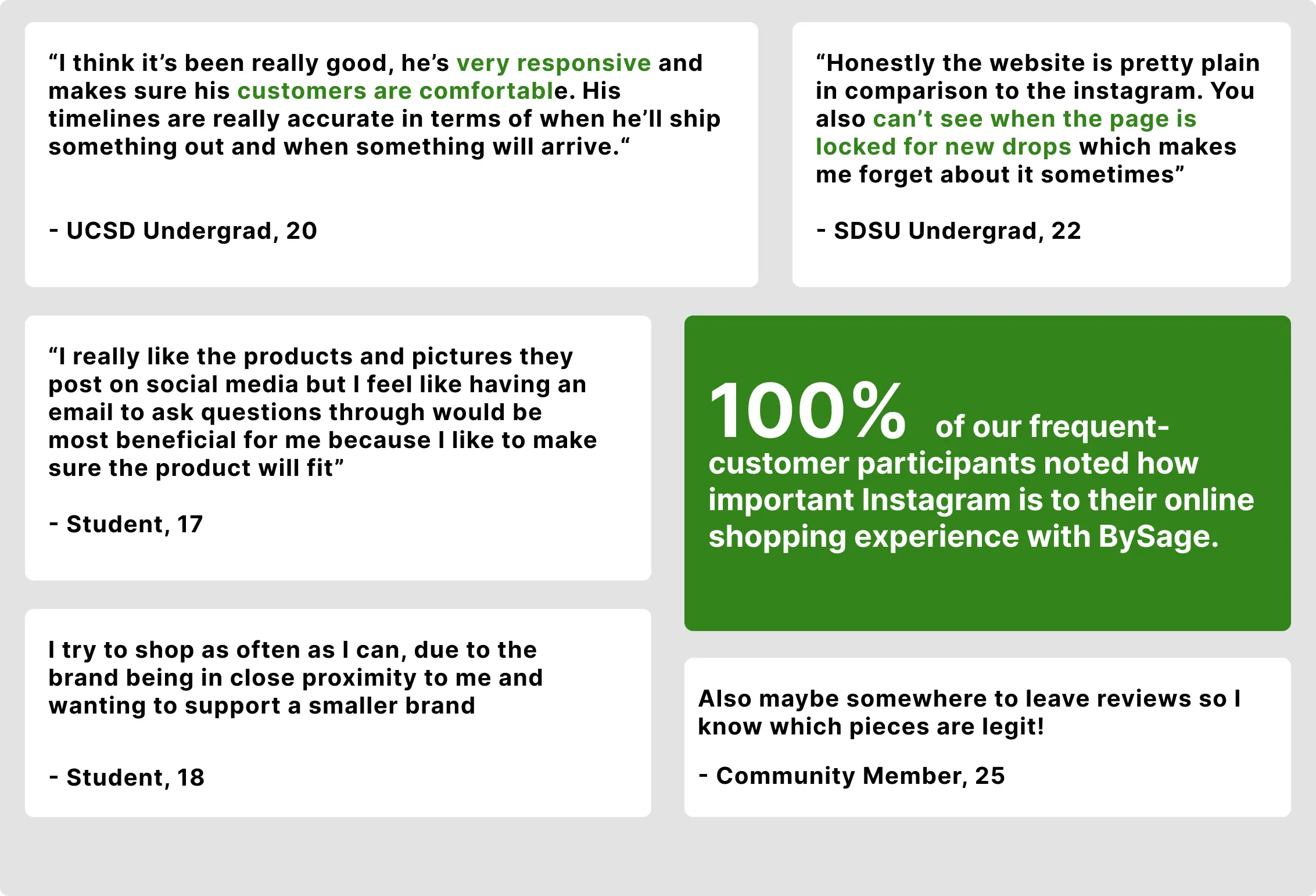
We surveyed BySage's existing customer base. 39% were repeat buyers, which gave us a strong signal about what loyalty looked like for this brand: people came back for the relationship with the founder and the local identity, not just the product.
The positive feedback centered on responsiveness to customer concerns, efficient purchasing through Instagram, and the appeal of supporting a local San Diego brand. The pain points were more structural:
Website only existed during drops
No customer reviews
Brand relied almost entirely on Instagram for discovery.
That gap between strong brand loyalty and weak web presence was the core problem. People loved BySage but had nowhere to engage with it outside of launch windows.
We created mood boards to explore a visual direction that felt authentic to BySage. The founder had a clear sense of his brand's identity but had never seen it translated into a full web experience. The mood boards became the bridge between his instinct and our design system: color palette, typography, photography style, and layout rhythm all came from this phase.


Before opening Figma, I mapped the site architecture. The original site had no persistent navigation. Most pages existed in isolation, and the only reliable path was back to Instagram. The new structure gave every page a clear place in the hierarchy: home, shop, about, and a look-book that let visitors browse the brand's visual identity outside of active drops.
This was the decision that turned BySage from a drop-only storefront into a year-round brand presence. Even when nothing was for sale, there was a reason to visit.

Where did we end up?
100+
New followers on his Instagram
1000+
New website visitors with the updates
20%+
Increase in traffic based during his drop
After the redesign launched, BySage saw an influx of visitors and traction. Those numbers mattered because they proved the thesis: giving the brand a persistent home drove engagement even outside of launch windows.
Beyond the metrics, the founder could now point people to a real website that represented his brand, not just a simple Instagram page.

My Key Takeaways
“The overall look and feel of the prototype is impressive. The design and detail is on point and I would definitely love to implement this! In terms of content and visuals, I think you guys nailed it."
- Cameron, Founder of BySage
What I would do differently: I would push harder on the product detail pages. We focused most of our energy on the homepage, navigation, and brand identity but the actual shopping flow (product pages, cart, checkout) could have used another round of testing. If I had more time, that is where I would have gone next.